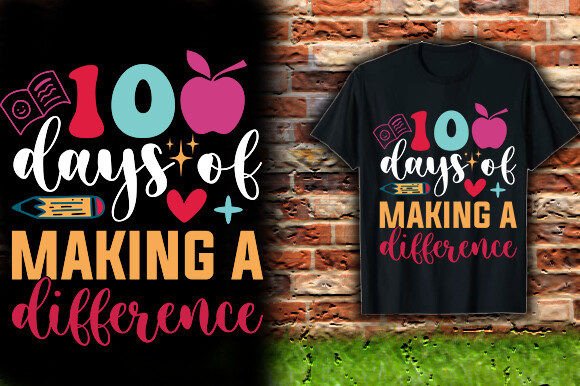
Reviewing the 100 Days of Making a Difference Design
As an embroidery designer who has spent years digitizing files and testing them on everything from flimsy baby onesies to heavy denim jackets, I have learned that not every graphic translates well to thread. When I first encountered the 100 DAYS of MAKING a DIFFERENCE TSHIRT design, my immediate reaction was one of cautious optimism. The concept is timely, tapping into the educational milestone that parents and teachers celebrate with pride. However, a good idea does not always equal a good machine embroidery design. I needed to know if this asset would hold up under the needle or if it would become a puckered mess on the hoop.
First Impressions and Visual Personality
The initial layout of the 100 DAYS of MAKING a DIFFERENCE TSHIRT graphic strikes a balance between bold typography and playful illustration. For those of us in the craft business, visual clarity is paramount. This design avoids the trap of being overly intricate, which is often where digital files fail in real-world application. The mood is celebratory yet structured, making it suitable for a wide range of audiences, from kindergarten classrooms to boutique apparel lines.
What stands out most is the potential for customization. Since the product description highlights that it is made with 100 resizable vector shapes and is fully editable in EPS 10 and SVG formats, the barrier to entry for modification is low. For an embroidery professional, this means we are not stuck with a static image. We can adjust proportions, swap out elements, or refine curves before even thinking about stitch generation. This flexibility is crucial for creating unique T-Shirt Designs that stand out in a saturated market.
Real-World Application: The Custom Sweatshirt Test
To truly evaluate this asset, I imagined a specific client scenario: a local elementary school requesting custom sweatshirts for their "100th Day of School" celebration. This is a high-volume, high-pressure job where consistency and durability matter. Using the 100 DAYS of MAKING a DIFFERENCE TSHIRT as the base, I considered how it would perform on a mid-weight cotton blend fleece.
In this context, the design’s clean lines suggest it would translate well into a combination of satin stitch for borders and fill stitch for larger areas. However, because the original file is a vector graphic intended for printing on t-shirts, stickers, and posters, it requires careful digitizing. One cannot simply auto-digitize a complex vector and expect professional results. I would recommend breaking down the 100 resizable vector shapes into manageable sections, ensuring that the stitch direction complements the fabric stretch. For a sweatshirt, a slight underlay is essential to prevent the design from sinking into the pile of the fleece.
Navigating Fabric and Hoop Constraints
While the design is versatile, there are specific situations where caution is required. If you are planning to use this on a curved surface like a cap, the width of the text might exceed standard hoop sizes. You would need to scale it down significantly, which could compromise the legibility of smaller details. Similarly, on thin or stretchy fabrics like jersey knits used in baby clothes, the density of the stitches becomes a critical factor. Too much coverage can cause the garment to pucker or distort after washing.
I advise testing the design on scrap fabric first. Check the stitch density carefully. If the original graphic has dense color blocks, you may need to reduce the density in your digitizing software to maintain the softness of the handmade product. For dark fabrics, ensure you have enough contrast in your thread colors. A common mistake is using threads that are too similar in value, causing the design to look muddy from a distance. Since this is a celebratory design, bright, contrasting colors usually work best to capture attention.
Commercial Viability and Brand Consistency
For Etsy sellers and small shop owners, the appeal of the 100 DAYS of MAKING a DIFFERENCE TSHIRT lies in its marketability. It fits perfectly into the niche of personalized gifts and seasonal merchandise. However, professionalism is key. A sloppy embroidery job can damage your brand reputation faster than a bad review. By taking the time to properly digitize this vector graphic, you elevate it from a simple clipart element to a premium embroidered patch or direct-to-garment style embroidery.
This design also works well for non-apparel items. Imagine it stitched onto a sturdy canvas tote bag design or a kitchen towel. In these applications, the stability of the fabric allows for higher stitch counts without distortion. It creates a tangible sense of quality that customers appreciate. When buyers see crisp edges and consistent tension, they trust the maker. This trust translates into repeat business and positive word-of-mouth, which is the lifeblood of any craft business.
Practical Notes for the Embroidery Designer
Before you commit to production, keep these technical considerations in mind:
- Check Licensing: Always confirm the license terms before selling finished items. While the file is editable, ensure commercial use is permitted for physical goods.
- Stabilizer Selection: Use a cut-away stabilizer for stretchy fabrics like t-shirts and sweatshirts to provide long-term support. For woven fabrics like aprons or pillow covers, a tear-away may suffice.
- Test Stitch-Outs: Never run a full production batch without a test. Check for thread breaks, nesting, or registration issues.
- Color Contrast: View your design in black and white mockups to ensure the shapes are distinct even without color.
- Hoop Size: Confirm that your machine’s hoop can accommodate the scaled size of the design, especially if you plan to add names or dates around the main graphic.
The 100 DAYS of MAKING a DIFFERENCE TSHIRT is a strong starting point for creative entrepreneurs. It offers the raw material needed for high-quality Graphics and apparel, but it demands respect for the embroidery process. By understanding the interplay between vector shapes and stitch types, you can transform this digital asset into a cherished personalized gift or a best-selling small shop product. Whether you are creating holiday embroidery for a family reunion or commercial embroidery for a school order, the key is preparation. Treat the design not just as an image, but as a blueprint for texture and form. With the right approach, this design can become a staple in your portfolio of design assets, proving that thoughtful execution always beats quick fixes in the world of handmade excellence.