Reviewing Dear Santa I Can Explain for Embroidery
As a designer who has spent countless hours digitizing and stitching out holiday motifs, I approach every new Graphics asset with a critical eye. We all know that what looks crisp on a screen does not always translate seamlessly to thread and fabric. This season, I took a close look at the Dear Santa I Can Explain SVG Design to evaluate its potential beyond digital printing. While this asset is marketed primarily within a Christmas SVG T-shirt design bundle, my focus was strictly on how it performs as a foundation for machine embroidery projects.
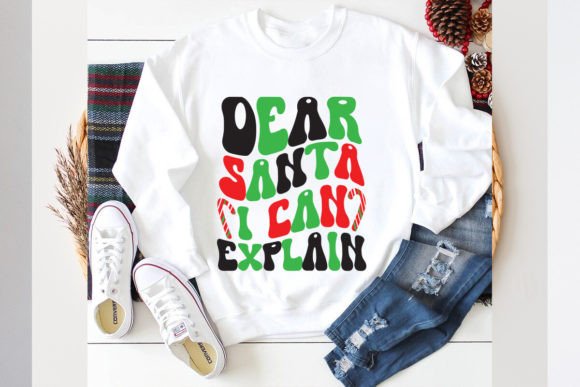
The first impression of this design is one of playful urgency. The phrase captures that universal moment of holiday mischief, making it an instant conversation starter. Visually, the layout suggests a balanced composition, but for us embroidery professionals, the devil is in the details. When I opened the files, specifically looking at the EPS file which is fully editable, I began mentally mapping out how these curves would behave under a needle. The mood is lighthearted, fitting perfectly into the category of trendy T-Shirt Designs, but its application in stitched form requires careful planning.
Real-World Application: The Holiday Sweatshirt Test
To truly test the viability of this design, I imagined a specific real-life scenario. A client requested a custom embroidered sweatshirt for a family holiday party. They wanted something funny but polished, avoiding the cheap look of mass-produced prints. I visualized placing the Dear Santa I Can Explain SVG Design on the left chest of a heavyweight cotton-blend crewneck. This placement is classic for custom apparel, offering high visibility without overwhelming the garment.
In this context, the design’s personality shines. It transforms a basic piece of clothing into a personalized gift with character. However, translating a vector graphic meant for vinyl or sublimation into a machine embroidery design requires more than just importing the file. I had to consider how the letterforms would hold up. Thin serifs or intricate connections in the text could easily get lost if the stitch density is too low or if the stabilizer is insufficient. For a project like this, the design serves as an excellent template for creating a custom digitized file, ensuring that each letter has enough substance to stand out against the fabric texture.
Navigating Fabric and Hoop Constraints
One of the most critical aspects of using any graphic for embroidery is understanding where it should be used carefully. The Dear Santa I Can Explain SVG Design features text that demands clarity. If you are working with small hoop sizes, such as a 4x4 inch hoop for a cap or a baby item, you must ensure the text remains legible. Tiny lettering can become a dense blob of thread if not scaled correctly. I recommend testing the design on scrap fabric first, especially if you are adjusting the size significantly from its original dimensions.
Textured fabrics present another challenge. If you are stitching this onto a waffle-knit towel or a fuzzy fleece blanket, the background texture can interfere with the stitch definition. In such cases, using a cutaway stabilizer is non-negotiable to provide a firm foundation. For stretchy fabrics like jersey knits used in t-shirts, a tear-away stabilizer might suffice, but only if the stitch density is managed well to prevent puckering. Dark fabrics also require attention; while the bundle includes white and black PNGs for reference, when stitching, you must choose thread colors that offer high contrast. A satin stitch border around the text can help define the edges on dark materials, preventing the design from blending into the background.
Enhancing Visual Appeal and Brand Value
For Etsy sellers and small shop owners, the quality of the finished product directly impacts customer trust. A well-executed embroidery job using a recognizable and witty phrase like this can significantly boost buyer engagement. It shows that the maker pays attention to current trends while maintaining professional standards. When customers see clean lines and consistent tension in the stitching, they perceive higher value in the handmade product.
This design fits naturally into various commercial embroidery projects. Beyond sweatshirts, consider its use on tote bags, aprons, or even pillow covers for holiday decor. The versatility of the phrase allows it to cross over from wearable custom apparel to home goods. For boutique branding, using this motif on limited-edition items can create a sense of exclusivity and fun. It is not just about selling a product; it is about selling a feeling of holiday joy and humor.
Practical Notes for the Embroidery Designer
Before you commit to stitching this design on a final product, there are several practical steps to take. First, remember that the provided files include PNGs and an EPS. The PNGs are print-ready, which is great for mockups, but they are not embroidery files. You will need to use the EPS or SVG as a reference to digitize the design properly or convert it using specialized software. Always check the license terms before selling finished items or digital products derived from this asset.
- Test on Scrap Fabric: Always run a test stitch-out to check for thread breaks or nesting issues.
- Check Thread Color Contrast: Ensure your thread choices pop against the fabric color, especially for red and green holiday themes.
- Review Stitch Density: Adjust density based on fabric weight; lighter fabrics need less density to prevent stiffness.
- Confirm Hoop Size: Make sure the scaled design fits comfortably within your hoop with adequate margin.
- Inspect Small Details: Zoom in on the digitized version to ensure no anchor points are too close together.
- Use Proper Stabilizer: Match the stabilizer type to the fabric stretch and weight.
Additionally, consider how the design looks in black and white mockups. This helps you judge the contrast and shape integrity without the distraction of color. If you are creating an embroidered patch, ensure the edges are finished with a satin stitch to prevent fraying. For baby embroidery, prioritize soft threads and avoid overly dense fill stitches that might irritate sensitive skin.
Final Thoughts on Commercial Viability
The Dear Santa I Can Explain SVG Design is a strong candidate for holiday collections when handled with technical precision. It bridges the gap between digital graphics and tactile art. For craft business owners, it offers a ready-made concept that resonates with buyers looking for humor and warmth. By treating the SVG as a starting point for careful digitization rather than a plug-and-play solution, you can elevate a simple graphic into a high-quality embroidery project.
Whether you are decorating kitchen towels, creating custom gifts, or stocking your online store with unique apparel, this design holds promise. Just remember that the magic lies in the execution. Pay attention to the stitch count implications, choose your materials wisely, and always prioritize the durability of the finished product. With the right approach, this design can become a standout piece in your holiday portfolio, delighting customers and showcasing your skill as a professional designer.